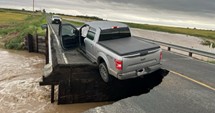
 The 144th Avenue Bridge Failure
A major flood destroyed the 144th Avenue Bridge, cutting off a rural route carrying approximately 1,000 vehicles per day. The only available detour forced residents onto narrow dirt roads unsuitable for freight and agricultural traffic.
Initial concepts proposed a temporary span, followed by a permanent replacement the following year. This approach would have:
- Doubled mobilizations
- Extended disruption for more than a year
- Increased total project cost significantly
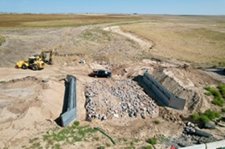 A Different Approach to Bridge Replacement
Instead, the county, working through a CM/GC process, selected a unified delivery approach using a prefabricated, cast-in-place bridge system.
Key outcomes included:
- A permanent bridge delivered in under six months
- Total project cost of approximately $2 million
- Estimated savings of $3 million and more than a year compared to initial engineering estimates
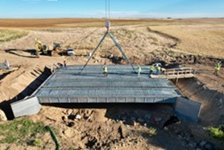 Construction highlights included:
- Prefabricated abutments and wing walls were set and filled the same day
- Lightweight deck panels installed in seven crane picks
- Approximately 300 labor hours, compared to nearly 3,000 hours for traditional methods
- An integral, jointless design to resist future flood events
The project also attracted regional interest, hosting a construction open day with over 50+ neighboring counties and engineers looking for replicable replacement methods.
Lessons for County and DOT Engineers
The 144th Avenue Bridge demonstrated that faster replacement does not have to mean temporary or lower quality. By reducing field complexity and coordinating delivery upfront, agencies can achieve permanent, resilient solutions on compressed timelines.
For counties facing flood damage, detour costs, and public pressure to reopen roads quickly, unified delivery offers a proven alternative to temporary fixes.
To explore this and other case studies in more detail, download the full eBook on rethinking short-span bridge delivery.